

A business can have plenty of customers, make regular sales and still struggle financially. The difference often comes down to how well the money coming into the business is managed and tracked.
Financial management is the process of planning, tracking and controlling how money moves through a business. It involves understanding income, expenses, cash flow, profits and financial obligations so that business owners can make informed decisions.
But financial management is not simply about recording transactions. It is about understanding what the numbers are telling you and using that information before financial problems become difficult to reverse.
A business can generate high sales while having little cash available, because money may be tied up in stock, unpaid customer balances, supplier obligations or operating expenses. This is why revenue alone does not tell the full story.
Knowing how much you sold is important, but knowing how much you actually kept and how much cash remains available is even more important.
Cash flow is the movement of money into and out of a business. When more money is leaving the business more than it is coming in, the business can experience financial pressure.
This is why timing matters. A customer may owe your business money for 30 days, while your supplier expects payment today. On paper, the sale is profitable, but your available cash may still be limited.
Keeping track of expected income, regular expenses and outstanding payments gives businesses a clearer picture of what they can actually afford.
Unnecessary subscriptions, excessive stock purchases, small daily expenses, avoidable transaction costs and untracked discounts may not seem significant individually. Over several months, however, they can take a noticeable portion of the business’s earnings.
Good financial management therefore requires paying attention to patterns, not just large expenses.
Some profit may need to go back into stock, equipment, marketing, employee development or business expansion. Some may need to remain available as a financial buffer for unexpected costs.
Treating every amount of profit as money available for personal spending can make a growing business appear successful while leaving it without enough resources to handle its next challenge.
Financial management works best when it becomes a regular habit rather than something done only when money becomes tight. Reviewing sales, expenses, outstanding payments and cash flow regularly can help reveal changes before they become serious problems. A sudden increase in expenses, declining profit margins or growing unpaid customer balances can all be early warning signs.
The goal is not to spend every day studying spreadsheets. It is to create enough financial visibility to notice when something is changing.

Knowing which products generate the most revenue, which expenses are increasing, which customers have outstanding balances and how much stock is tied up in the business can change the way you make decisions.
Instead of asking, “How much money do I have?”, you can begin asking better questions: “Where is my money going?”, “What is generating the most value?” and “What should I change?”
A business cannot always control how much customers spend or when unexpected expenses arise, but it can control how carefully it monitors its finances, manages costs and prepares for future needs.
Businesses that develop strong financial habits are better positioned to handle slow periods, unexpected expenses and opportunities for growth without making decisions based purely on guesswork.
By monitoring cash flow, controlling expenses, understanding profitability and regularly reviewing financial information, businesses can gain a clearer picture of where they stand and make better decisions about where they are going.
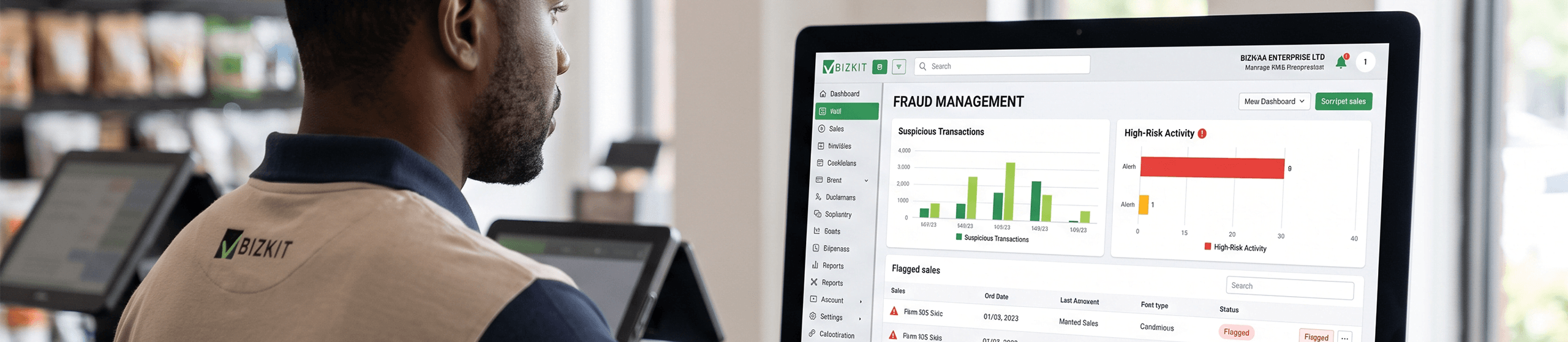
With the right tools, keeping track of these financial activities becomes easier. A POS system like BizKit can help businesses monitor sales, expenses, inventory and other financial information in one place, giving business owners better visibility as they manage and grow their businesses.
Why Managing Money Matters More Than Making Sales
Why Inventory Accounting is One of the Most Important Controls in Retail and Wholesale Businesses

Why Fraud and Theft Can Quietly Damage a Growing Business
Customer Retention: The Most Overlooked Business Tactic