
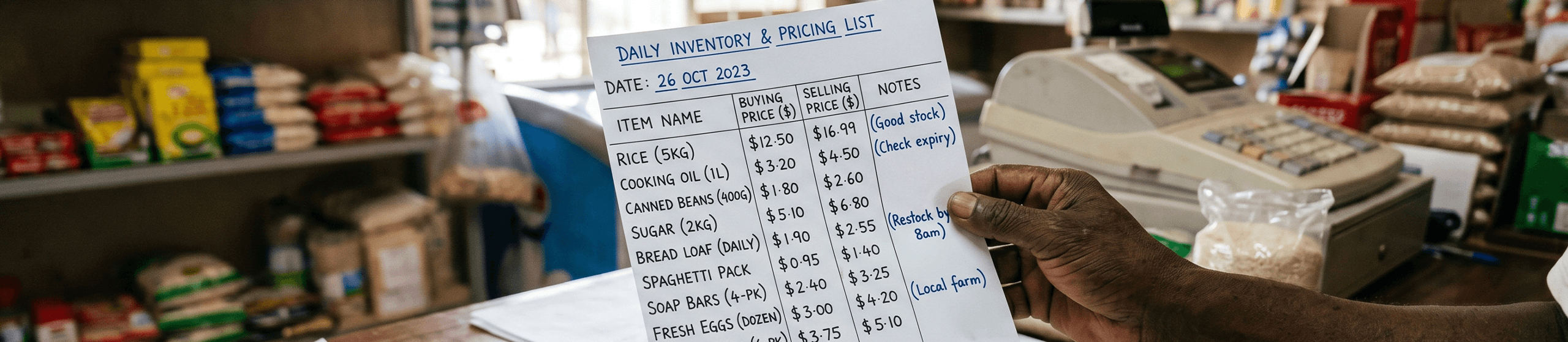
Pricing is not just about attracting customers. It is one of the most powerful growth tools a business has. A well-designed pricing strategy can improve profitability, strengthen customer loyalty, and position a business more effectively in the market.
Many businesses assume that lowering prices is the fastest way to win customers. While discounts can generate short-term sales, constantly competing on price creates a dangerous cycle.
Customers begin to associate your business with being “cheap” rather than valuable. Profit margins shrink, making it harder to invest in stock, marketing, staff or customer service. Over time, the business works harder but earns less.
Instead of asking, “How can I charge less?” consider asking, “How can I create more value?“
Customers are often willing to pay more when they clearly understand the benefits they receive in return.
One of the biggest pricing mistakes businesses make is focusing only on the product itself. Customers rarely buy products for the product alone. They buy outcomes.
A restaurant customer is not simply buying food. They are buying convenience, enjoyment, speed or a memorable experience.
A salon customer is not buying a haircut. They are buying confidence.
A hardware customer is not buying tools. They are buying the ability to complete a project successfully.
When businesses understand the outcome customers are seeking, they can price more effectively because they are selling value, not just inventory.
Studies consistently show that customers often struggle when given only one choice.
A simple but effective strategy is offering three options:
Interestingly, many customers choose the middle option because it feels like the safest decision.
This approach not only improves customer satisfaction but can also increase average transaction value without pressuring customers to spend more.

Many business owners focus heavily on increasing sales volume while overlooking pricing opportunities. A small increase in price can often generate more profit than a significant increase in sales.
For example, increasing prices by 5% may improve profitability more than trying to sell 20% more units, especially when operating costs continue to rise.
The key is to make price adjustments strategically and communicate the value customers receive rather than focusing on the increase itself.
One of the most overlooked aspects of pricing strategy is measuring what customers actually buy.
Many businesses assume they know their best-selling products, most profitable items, or peak selling periods. However, assumptions often lead to missed opportunities.
Tracking sales data helps identify:
The more visibility you have into your sales data, the easier it becomes to make pricing decisions with confidence.
The most successful businesses do not view pricing as a number attached to a product. They view it as a strategic decision that influences profitability, customer perception and long-term growth.
Businesses that use a modern POS system such as BizKit can gain better visibility into sales trends, customer purchasing patterns, and product performance, making it easier to build pricing strategies based on real business data instead of guesswork.
Revenue Management: Is Your Business Growing Revenue or Just Chasing Sales?

Pricing and Profitability: What Should Your Business Really Be Charging?
Operational Systems and Process Management: How Can Businesses Run Better Without Constant Supervision?

Why Managing Money Matters More Than Making Sales